Article
4 min
How Trader Joe’s had Americans queuing for shopping bags like the next iPhone

Are you engineering demand?
What if the most powerful brand-building tool in your retail arsenal isn't your loyalty program, advertising budget, or store design but something customers pay you to carry around? Trader Joe's just proved it, driving a 12% visit increase and measurable loyalty gains through branded merchandise. Meanwhile, most multi-location brands are still treating swag as an afterthought.
The Wrong Assumption About Competitive Differentiation
U.S. brands facing intensifying competition typically follow the same playbook: maximize distribution, flood channels, optimize for reach. It's what the consultants recommend. It's what the case studies show. And it's increasingly wrong.
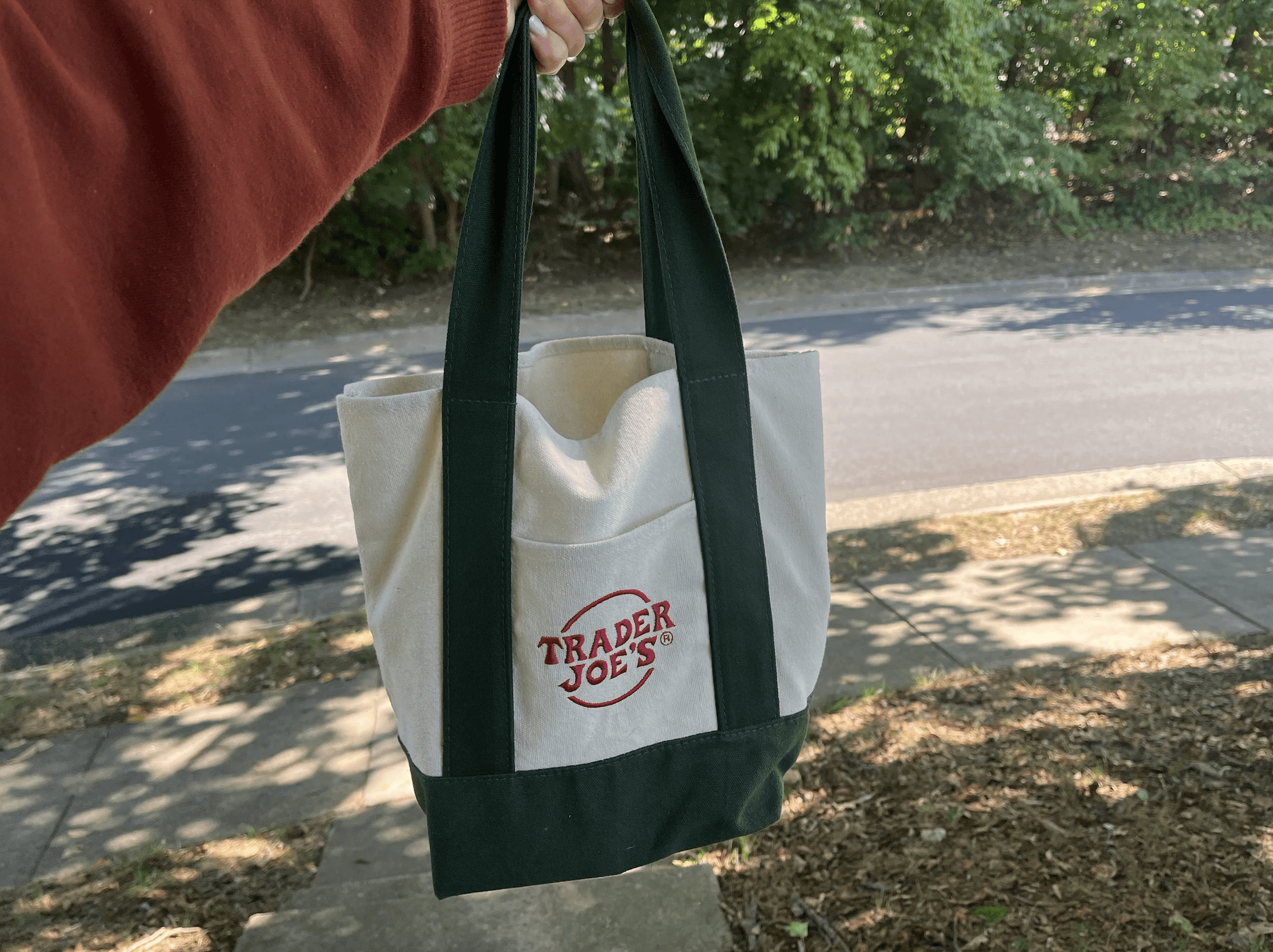
Trader Joe's limited-edition bag releases demonstrate a counter-intuitive truth about American consumer psychology that mainstream retailers consistently underestimate: exclusivity generates more brand velocity than availability. While competitors expand SKU counts and distribution points, Trader Joe's creates artificial scarcity around $2 reusable bags, and watches consumers rush stores, generate organic social buzz, and return repeatedly to complete collections.
This isn't just clever merchandising. It's a masterclass in understanding what actually drives consumer behavior in an oversaturated market where every brand is fighting for the same wallet share.
Three Performance Lessons Hidden in Plain Sight
What if your retention strategy is backwards?
Most brands measure retention through repeat purchase rates. Trader Joe's engineers it through collectible psychology. Their rotating bag designs, tied to seasons and holidays, create systematic reasons to return that have nothing to do with product need.
The performance impact? While the broader retail sector sees 20% higher retention rates among sustainability-focused consumers, Trader Joe's approach stacks behavioral economics on top of values alignment. They're not just selling eco-friendly bags; they're selling the dopamine hit of completing a set.
For brands competing on traditional metrics (product quality, price, convenience) this represents a crucial pivot: consumers respond powerfully to gamification of mundane purchases. Your brand story matters less than the next limited drop.
Confusing sustainability messaging with sustainability performance
Here's where it gets interesting for competitive strategy. The research shows 62% of consumers prefer brands with sustainable practices. Whole Foods responds with campaigns promoting eco-friendly practices. Aldi announces plastic bag elimination timelines.
Trader Joe's? They just make the sustainable option the collectible one.
While most brands lead with sustainability credentials in marketing campaigns, actual market performance requires embedding those values into desire mechanics, not declaration mechanics. The 50% increase in eco-friendly bag demand isn't driven by companies announcing sustainability goals. It's driven by companies making sustainable choices feel exclusive, smart, and social-media-worthy.
Your sustainability story won't drive performance until you engineer it into consumer behavior patterns, not brand positioning decks.
How much are you spending to achieve what scarcity creates for free?
Trader Joe's limited-edition strategy generates three performance outcomes most brands pay dearly for: repeat traffic, social amplification, and zero-cost media impressions. No influencer budget. No paid social. No programmatic display. Just strategic constraint.
For brands running integrated campaigns spanning multiple channels, this represents a fundamental rethinking of resource allocation. The research indicates AI-driven personalization is seeing 30% adoption increases year-over-year. But personalization at scale requires tech stack investments, data infrastructure, and ongoing optimization costs.
Scarcity requires saying "no" strategically, arguably the hardest thing for brands to do after committing resources to growth initiatives and channel expansion.
The Strategic Rethink
Three imperatives for your next planning session:
Engineer desire, don't just optimize distribution. American consumers increasingly respond to scarcity and exclusivity mechanics, while most competitive strategies remain focused entirely on availability and reach. The brands winning market share are the ones creating reasons to want their products, not just making them easier to find.
Launch your next product with 50% of planned inventory, not 150%. Scarcity psychology can work harder than your entire media plan. Strategic constraint creates urgency, social proof, and organic amplification that paid campaigns struggle to replicate. And it does so at a fraction of the cost.
Build campaigns around what makes your brand irresistible, not just available. Trader Joe's just proved you can't buy desire with distribution budgets. The most efficient path to performance isn't making your products accessible everywhere; it's making them worth seeking out somewhere specific.